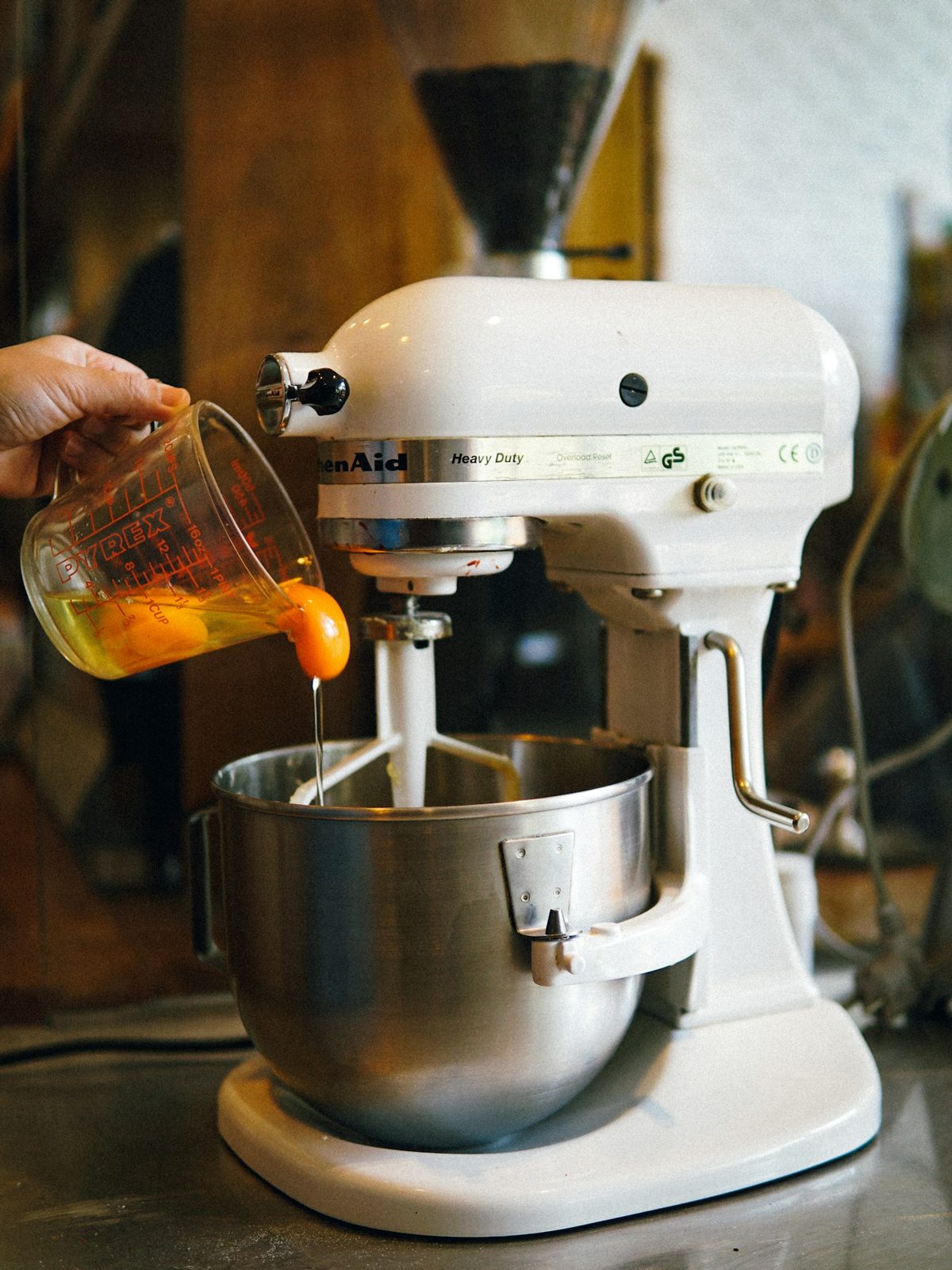
Buy a stand mixer if you bake bread or bake every week. Buy a hand mixer if you bake a few times a year and your counter is small. We did not bake with the KitchenAid for this page. This comparison comes from specs, owner reports, and how each tool suits the job.
The differences that matter
| KitchenAid Artisan stand mixer | Typical hand mixer | |
|---|---|---|
| Bowl | Five quart bowl on a stand | Use any bowl you own |
| Hands | Free while it mixes | One hand holds it the whole time |
| Bread dough | Handles it with a dough hook | Most models cannot knead dough |
| Power | Strong motor for stiff dough | Fine for batter, whipped cream, and meringue |
| Counter space | Heavy, tall, and wide | Fits in a drawer |
| Weight | Heavy, so it stays on the counter | Light |
| Attachments | Many, such as pasta rollers and meat grinders | Beaters and whisk only |
| Price band | One of the most expensive tools in this category | The budget pick |
When the stand mixer wins
Choose the stand mixer if you make bread. Kneading a stiff dough for ten minutes by hand is hard work, and most hand mixers will strain or burn out on it. A stand mixer with a dough hook does the work while you clean up.
It also suits a cook who bakes each week. Cookie dough, cake batter, and whipped cream all go faster when you can leave the room. The five quart bowl makes a double batch of cookies in one go.
Free hands matter more than people expect. You can add flour, scrape the bowl, or measure the next ingredient while the mixer runs. That makes long recipes easier, such as brioche or large cakes.
The cost is space and money. It is heavy and tall, so it lives on the counter or you lift it out each time. Owners often report that this model lasts a generation, but that only matters if you use it.
When the hand mixer wins
Choose the hand mixer when you bake now and then. Cake batter, brownies, mashed potatoes, whipped cream, and meringue all work well with a hand mixer. For these jobs, the stand mixer is more than you need.
It is also the right pick for a small kitchen. A hand mixer stores in a drawer and washes in a minute. You can also use it in any bowl or pot, even over a pan of warm water for an egg mixture.
The cost is effort and limits. You must hold it the whole time, and it cannot knead bread dough well. Thick cookie dough can make a weak model slow down or stop.
The middle path
If you are not sure, start with a hand mixer. Use it for a few months. If you find yourself wishing for a third hand, or you start baking bread, move up to the stand mixer. A hand mixer is cheap enough that it still has a use later, for small jobs when you do not want to wash the big bowl.
Another option is no electric mixer for bread at all. No-knead recipes need only a bowl and time. A whisk and some arm strength cover many cakes.
Who should buy neither
Skip both if you bake only a few times a year. A whisk, a spatula, and a bowl are enough for most batters. Skip the stand mixer if you have no spare counter or cabinet space for a heavy machine. It will end up in a closet.
Skip the hand mixer if you will make bread or large batches of stiff cookie dough. You will need the stand mixer anyway.