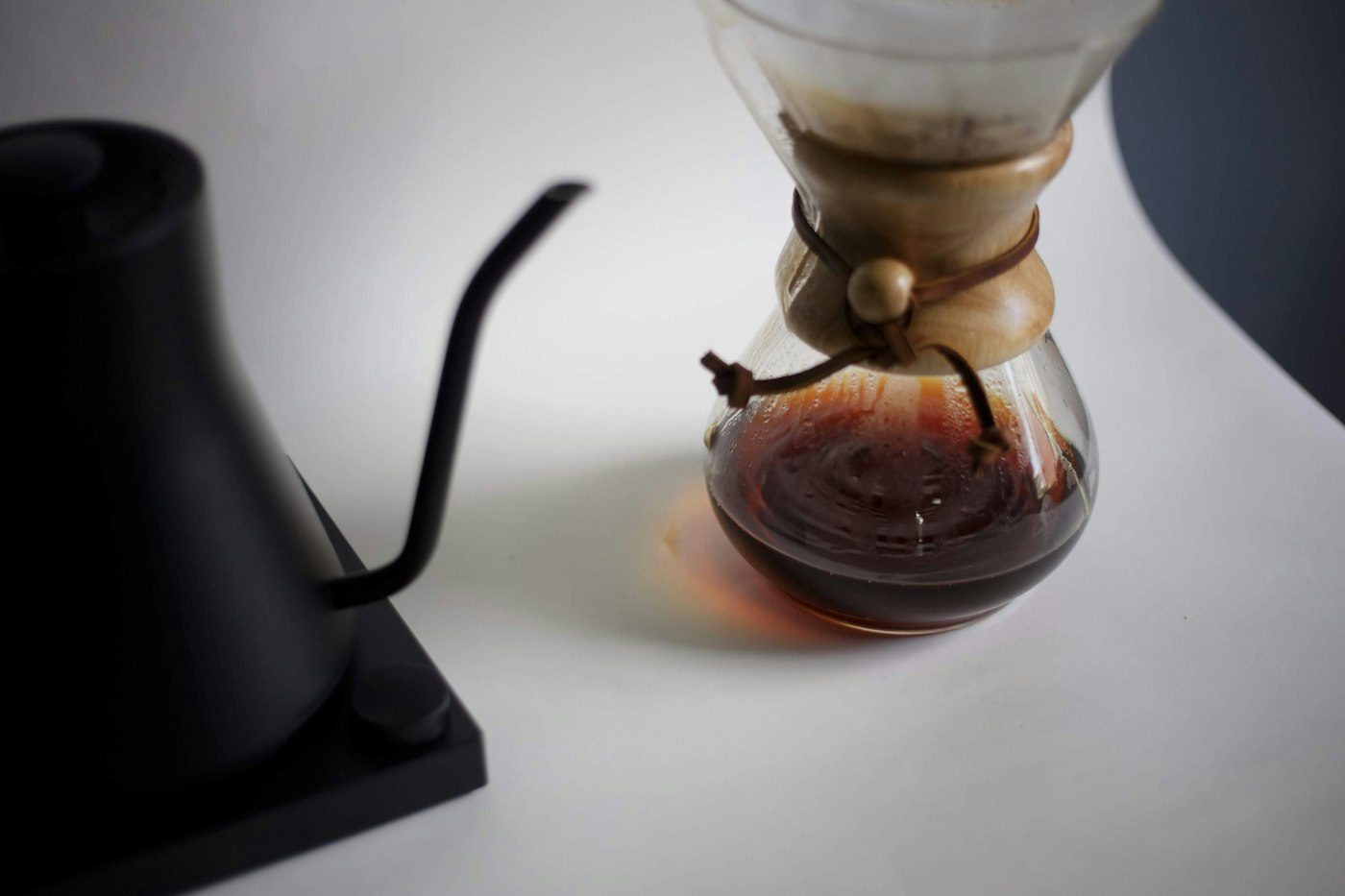
No, you do not need a gooseneck kettle for pour over, but it makes the method easier to repeat. The long thin spout gives you control over where the water lands and how fast it flows.
A normal kettle can make a fine cup. The gooseneck matters most when you want a steady, even brew from day to day.
What pour control does
Pour over works by wetting the coffee grounds evenly. If you dump water in a heavy stream, it can dig a channel through the bed. Water then races through one spot and skips the rest. The cup tastes thin and sour in some sips and bitter in others.
A gooseneck lets you pour a thin, slow stream. You can start with a small amount to bloom the grounds, then move in circles at a steady pace. This is the main reason that pour over guides call for one.
The slow flow also helps your timing. Most recipes expect the brew to finish in about three minutes. A fast pour makes the brew run short, and a good spout helps you hit the target.
When a normal kettle is fine
A regular kettle works in several cases.
- You use a flat bottom drip cone or a basket with a wide coffee bed. These forgive an uneven pour.
- You brew a dark roast. Dark roasts extract easily and handle rough pours well.
- You drink one cup in the morning and do not want to fuss.
- You can pour with care. Tilt the kettle slowly and keep the stream low and near the grounds.
A trick for a normal kettle: pour into a small jug with a spout first, then pour from the jug. A measuring cup with a lip does the job.
If you have to choose, spend on a decent grinder before you spend on a kettle. Fresh, even grounds change the cup more.
What temperature control adds
Many electric gooseneck kettles let you set an exact temperature. This is the second reason to buy one.
For coffee, water just off the boil is common advice, around 195 to 205 degrees F. Light roasts are dense and often taste better with hotter water, while dark roasts can taste harsh with it.
For tea, the gap is larger. Green and white teas turn bitter in boiling water. They do better around 160 to 185 degrees F. Oolong and black tea like it hotter. A kettle with a dial removes the guessing, so you do not need to wait and watch a thermometer.
Many models also hold the set temperature for a time. That helps if you make a second cup or brew for two people.
Who should buy one
A gooseneck electric kettle suits someone who brews pour over most days, drinks light roasts, or switches between coffee and several kinds of tea. It also helps if you like a repeatable routine.
Who should skip it
Skip it if you use a French press, an automatic drip machine or an espresso machine. None of those need a thin pour. Skip it as well if your counter space is tight, or if you only drink dark roast and black tea. A basic kettle will serve you fine.
A kettle to start with
This one has a variable temperature setting and a gooseneck spout in one body.